Crisis management is more art than science and the response must be in proportion to the magnitude of the crisis. American Airlines was put in a tight spot financially by the Coronavirus, but their past financial policies have exacerbated the impact of the pandemic. American’s actions thus far have been inadequate and are severely lacking with respect to ethical considerations what a leader should do in a time of crisis.
Professor Scott Galloway of NYU’s Stern School of Business summarizes crisis response on his blog and how leaders should be acting right now. He uses the famous Johnson & Johnson Tylenol recall of 1982 as a model for crisis management below are the main three points.

While it may seem expensive at first to take this approach and opens the company up to liability. History has shown that companies that behave in this manner and aggressively take responsibility build better relationships with their customers and society and have better financial performance as a result.
Viewing this situation through a Deontological framework would yield the best results not only for the company and their stakeholders but also mitigate the risk transfer to other aspects of society. To me, leaders have a duty to do the right thing by their subordinates while simultaneously accomplishing the mission. As Omar from HBO’s The Wire says:
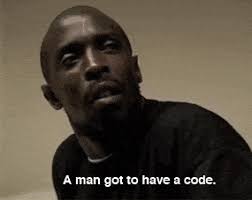
Having guiding principles and a sense of duty is essential for effective leadership. During times of great uncertainty, it is impossible to know what the right decision is to make. Leaders that have a code and a sense of duty can be expected to behave more ethically in difficult times as their principles will guide them to do the right thing as opposed to acting in a selfish manner. The Marine Corps has an ethic that all leaders must internalize and it is that “leaders eat last.” This does not exclusively refer to food but it prioritizes troop welfare because the organization realizes that their human capital is their most important asset and they would be unable to accomplish their mission if they neglected their employees.
Using the “leaders eat last” ethic and Professor Galloway’s crisis response framework I would use the following approach:
- Acknowledge past financial policies have put them in this position.
- Firm Commitment that no one will lose their jobs.
- Raise capital by “whatever it takes”
- Taking the government bailout as a last resort.
Acknowledge past financial policies have put them in this position.
American has yet to issue a statement regarding its financial engineering and executive compensation practices. This should be remedied, as nearly every mention in the media of the Airline industry seeking government assistance brings up the dollar amount of the shares repurchased and the amount of executive compensation. By acknowledging their reckless behavior it may not soothe public anger but it will be a step in the right direction as far as how to ensure nothing like this happens again happens in the foreseeable future.
Firm Commitment that no one will lose their jobs.
This commitment falls under the “overcorrect” portion of Professor Galloway’s framework as well as the “leaders eat last” ethic. In the official statement from American Airlines, Doug Parker said that people may still lose their jobs even though they would be receiving government assistance. This is not something you say to people to try and soothe their nerves. These executives have been acting as if they have no skin in the game. They also risk trying to rebuild the human capital of their company if they suddenly and unceremoniously dismiss large portions of their workforce.
Raise capital by “whatever it takes”
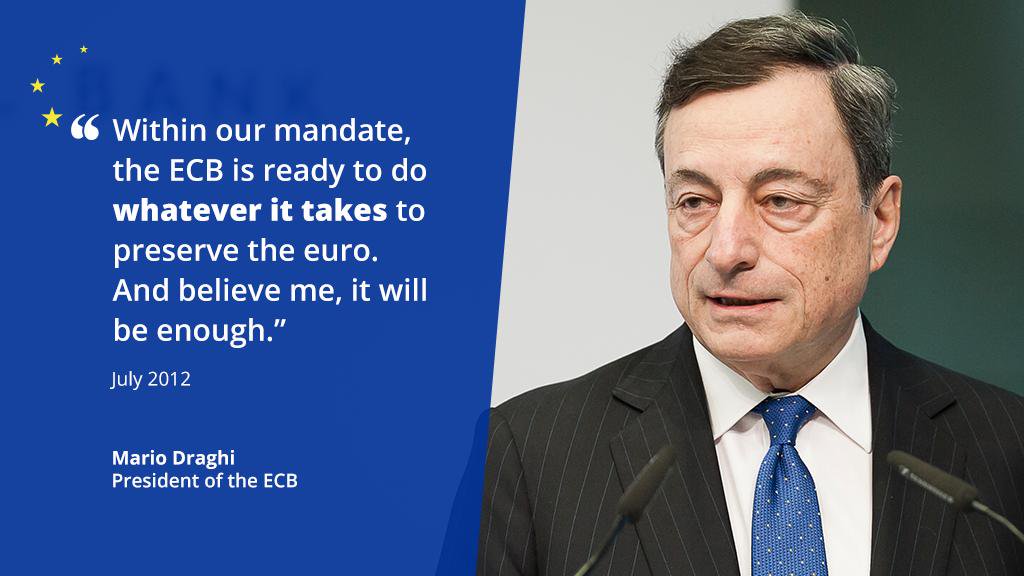
“Whatever it takes” is what European Central Bank President Mario Draghi said at the height of the Eurozone Crisis in 2012. This moment was the watershed moment in the crisis and when the situation began to be stabilized. This infamous line is a mix of taking responsibility and overcorrecting from the crisis management framework.
American has options here to raise capital. They could issue debt, draw on short-term credit, and issue equity. After all, America is a capitalist society and shouldn’t businesses exhaust every possible option before going to the taxpayer? While issuing new shares when the stock is trading around $9.50 would certainly drive the price lower. The long term profitability of the firm is at stake if they become defacto nationalized as a result of the bailouts would definitely be a worse outcome. In addition, the company executives that have spent the past decade enriching themselves at the expense of the company could put their own capital and wealth back into the business for the sake of the shareholders and stakeholders. This is not only their duty in the case of shareholders but their ethical responsibility to their employees and other stakeholders.
Taking the government bailout as a last resort.
If American Airlines think that the bailout money is not a Faustian bargain (deal with the devil) then they haven’t been paying attention. They are placing a implicit bet on that the risk transfer to the public will not occur. Additionally, even if the strings attached to the money in the CARES act seems reasonable. If the executives aren’t careful with how they spend the money and provide for their workers they could be facing potentially a mountain of government litigation. With the public facing unprecedented levels of unemployment the probability of American getting a fair trial would be quite small.
Although, the coronavirus crisis is not the fault of American Airlines and their business certainly has been impacted. They are provided with an opportunity to do the right thing by their shareholders and stakeholders. The right thing requires them to reject every instinct and behavior that they followed over the past decade. As I have argued their decisions here hold significant consequences for American society and the long-term profitability for their firm. While the situation is still fluid and there are a lot of unknowns such as how long the crisis will last and how quickly people will return to normal. American Airlines has time to adjust their a response in a more ethical fashion.
Sources:
Professor Galloway – Crisis Management
 Site Title
Hi Alex,
Thank you for sharing us your last post, I really learnt a lot from the case. My opinion is that ethics should be build on a solid legislation fundamentals. Regarding the point of “Taking the government bailout as a last resort”, I would like to add a bit more: In addition to the rescue of individual institutions, the lender of last resort is more important to assume the role of “Dealer of Last Resort” to unblock the transmission mechanism of monetary policy and activate the market. Second, the central bank’s assumption of bailout-the-losses will undoubtedly exacerbate the moral hazard problem in the event and beforehand, and the creditors and investors of the problematic institution should be made to bear such losses as well, thus reducing the incentive for risk taking.
LikeLike
Hi Alex,
I agree with you that leaders have a duty to do the right thing based on their mission. It’s important for leaders or managers to have ethical behaviors because they influence those who follow them. They should walk the talk by following their code of conduct and lead by example. In times of crisis, people worry and panic, and self-interest takes place in the spotlight. Today, it will be hard to try to rationalize everyone, especially people who run businesses. They will never accept to sacrifice their businesses at the expense of others’ lives. However, I believe this the right time for everyone especially leaders to follow principles or rules to have our society in order. If everyone acts on his/her self-interest it’s going to be chaos. The Deontological framework is the perfect ethical framework to be applied to this ethical dilemma to value right and wrong are based on principles and rules.
LikeLike