Alternative Course of Action

Crisis management is more art than science and the response must be in proportion to the magnitude of the crisis. American Airlines was put in a tight spot financially by the Coronavirus, but their past financial policies have exacerbated the impact of the pandemic. American’s actions thus far have been inadequate and are severely lacking with respect to ethical considerations what a leader should do in a time of crisis.

Professor Scott Galloway of NYU’s Stern School of Business summarizes crisis response on his blog and how leaders should be acting right now. He uses the famous Johnson & Johnson Tylenol recall of 1982 as a model for crisis management below are the main three points.

While it may seem expensive at first to take this approach and opens the company up to liability. History has shown that companies that behave in this manner and aggressively take responsibility build better relationships with their customers and society and have better financial performance as a result.

Viewing this situation through a Deontological framework would yield the best results not only for the company and their stakeholders but also mitigate the risk transfer to other aspects of society. To me, leaders have a duty to do the right thing by their subordinates while simultaneously accomplishing the mission. As Omar from HBO’s The Wire says:
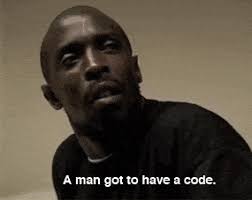
Omar From 'The Wire' Has a Protege on 'Game of Thrones'

Having guiding principles and a sense of duty is essential for effective leadership. During times of great uncertainty, it is impossible to know what the right decision is to make. Leaders that have a code and a sense of duty can be expected to behave more ethically in difficult times as their principles will guide them to do the right thing as opposed to acting in a selfish manner. The Marine Corps has an ethic that all leaders must internalize and it is that “leaders eat last.” This does not exclusively refer to food but it prioritizes troop welfare because the organization realizes that their human capital is their most important asset and they would be unable to accomplish their mission if they neglected their employees.

Using the “leaders eat last” ethic and Professor Galloway’s crisis response framework I would use the following approach:

  • Acknowledge past financial policies have put them in this position.
  • Firm Commitment that no one will lose their jobs.
  • Raise capital by “whatever it takes”
  • Taking the government bailout as a last resort.

Acknowledge past financial policies have put them in this position.

American has yet to issue a statement regarding its financial engineering and executive compensation practices. This should be remedied, as nearly every mention in the media of the Airline industry seeking government assistance brings up the dollar amount of the shares repurchased and the amount of executive compensation. By acknowledging their reckless behavior it may not soothe public anger but it will be a step in the right direction as far as how to ensure nothing like this happens again happens in the foreseeable future.

Firm Commitment that no one will lose their jobs.

This commitment falls under the “overcorrect” portion of Professor Galloway’s framework as well as the “leaders eat last” ethic. In the official statement from American Airlines, Doug Parker said that people may still lose their jobs even though they would be receiving government assistance. This is not something you say to people to try and soothe their nerves. These executives have been acting as if they have no skin in the game. They also risk trying to rebuild the human capital of their company if they suddenly and unceremoniously dismiss large portions of their workforce.

Raise capital by “whatever it takes”

“Whatever it takes” is what European Central Bank President Mario Draghi said at the height of the Eurozone Crisis in 2012. This moment was the watershed moment in the crisis and when the situation began to be stabilized. This infamous line is a mix of taking responsibility and overcorrecting from the crisis management framework.
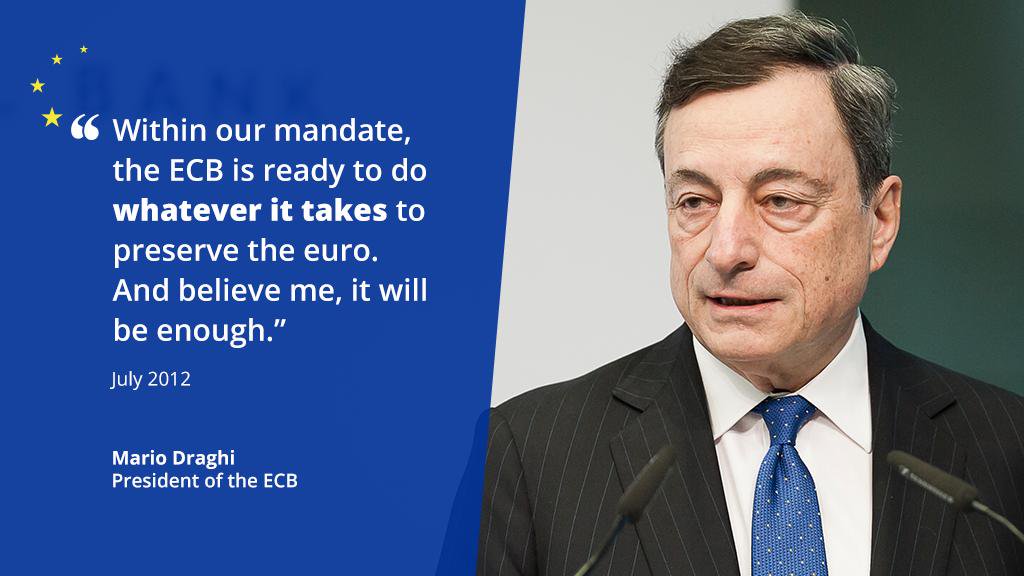
Why “helicopter money” is the new whatever it takes

American has options here to raise capital. They could issue debt, draw on short-term credit, and issue equity. After all, America is a capitalist society and shouldn’t businesses exhaust every possible option before going to the taxpayer? While issuing new shares when the stock is trading around $9.50 would certainly drive the price lower. The long term profitability of the firm is at stake if they become defacto nationalized as a result of the bailouts would definitely be a worse outcome. In addition, the company executives that have spent the past decade enriching themselves at the expense of the company could put their own capital and wealth back into the business for the sake of the shareholders and stakeholders. This is not only their duty in the case of shareholders but their ethical responsibility to their employees and other stakeholders.

Taking the government bailout as a last resort.

If American Airlines think that the bailout money is not a Faustian bargain (deal with the devil) then they haven’t been paying attention. They are placing a implicit bet on that the risk transfer to the public will not occur. Additionally, even if the strings attached to the money in the CARES act seems reasonable. If the executives aren’t careful with how they spend the money and provide for their workers they could be facing potentially a mountain of government litigation. With the public facing unprecedented levels of unemployment the probability of American getting a fair trial would be quite small.

Although, the coronavirus crisis is not the fault of American Airlines and their business certainly has been impacted. They are provided with an opportunity to do the right thing by their shareholders and stakeholders. The right thing requires them to reject every instinct and behavior that they followed over the past decade. As I have argued their decisions here hold significant consequences for American society and the long-term profitability for their firm. While the situation is still fluid and there are a lot of unknowns such as how long the crisis will last and how quickly people will return to normal. American Airlines has time to adjust their a response in a more ethical fashion.

Sources:

Professor Galloway – Crisis Management

Mario Draghi – Whatever it takes

The Wire: Omar Little

American Airlines official response to CARES act

Public Criticism of American Response

There have been widespread criticism from individuals spanning the political spectrum. You have the usual suspects from the left vilifying the greedy behavior of American Airlines putting the pursuit of short-term profits at the sake of long-term stability and their employees. On the other side the ardent capitalists are decrying crony capitalism where American is using its large political influence to extract taxpayer money to cover their loses. With memories of the 2008 financial crisis and subsequent bailouts still fresh in people’s minds. The idea of giving money to businesses that behaved recklessly who will then turn around and give themselves large bonuses will not sit well with many Americans that are currently unemployed.

US unemployment rate: New claims surge to record 6.6 million for ...
The initial unemployment claims as a result of the Coronavirus might as well be off the charts. These numbers also doesnt reflect the reality as many people were unable to file due to the large volume caused the websites to Crash.

Nicholas Nassim Taleb

Author Nicholas Nassim Taleb who works include: The Black Swan, Antifragile, and Skin in the Game. Wrote a blog post in response of the corporate bailouts being offered to Boeing and the Airlines. He has also been critical of the bank bailouts of 2008 and the phenomenon of “privatizing profits and socializing losses.” He also wrote in The Black Swan in 2007 that due to our increased level of interconnection that an pandemic would be inevitable and should not be considered a black swan event. In the Bloomberg interview below he explains why the bailout for corporations that did not reasonably create a cash buffer or get insurance for this kind of event should not rewarded for their irresponsibility.

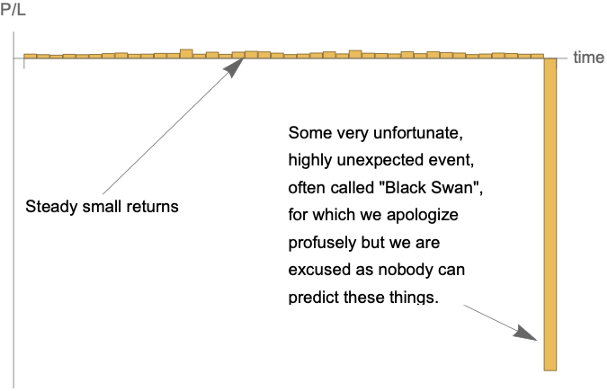
The Generalized Bob Rubin Trade: Keep the profits, transfer losses to taxpayers. Named after Bob Rubin who pocketed 120 million dollars from Citi but claimed uncertainty and kept past bonuses. This encourages anyone to never be insured for such eventualities since the government will pick up the tab.

Above is a chart from his blog post “Corporate Socialism: The Government is Bailing Out Investors & Managers Not You” and it demonstrates that the airlines such as American have been taking excess risk over the past decade by not having a buffer, buying back shares, large executive compensation are not planning on assuming that risk but is instead transferring that risk for the public.

Jonathan Tepper

Jonathan Tepper wrote a with Denise Hearn called the The Myth of Capitalism were he breaks down the degree to which our economies have been dominated by monopolies and the knock on effects that this has on our society. He also founded investment research firm Variant Perception.

He wrote an essay titled “Covid-19 has exposed our financial fragility -An orgy of borrowing, speculation and euphoria has left the markets on the verge of catastrophe” in which he discusses how fragile our economic system was going into this crisis and how the problems that led up to 2008 where never fixed and have inevitably led us to this current moment. He takes a big picture macro-economic view of the situation and it explains how this current moment is so economically disruptive to our society. Since the financial crisis central banks have been suppressing risk and volatility and allowing large companies to borrow cheap debt in order to stimulate financial assets which may in turn stimulate economic growth. But by not allowing companies to fail and bankruptcy processes to occur both investors and managers are not encouraged to manage risk and responsible businesses are not rewarded for their behavior.

Forest fires are a useful analogy. California has infrequent, devastating forest fires; the Mexican state of Baja California has many small frequent fires and almost no major catastrophic fires. Both states have a similar climate and vegetation, yet they have vastly different outcomes. That’s because when there are very few small fires, underbrush grows, vegetation increases and creates greater kindling for the next fire. Suppressing small risks only makes them emerge eventually as very big ones.

Jonathan Tepper

This quote from Jonathan is a helpful analogy of the effect of risk suppression and how it is like energy in that it cannot be created or destroyed only transferred. As a result of this excessive financial engineering via share repurchases and debt issuance these companies have created a fragile system where a biological problem is creating another once in a century financial crisis. The most heinous example of this is Boeing which bought back $100 billion dollars worth of their shares and caused the deaths of hundreds from their poorly designed 737 max aircraft. Boeing put financial engineering ahead of real engineering which is troubling from an aircraft manufacturer who is now begging the government for a handout so they can survive. Whereas the airlines bought back 96% of their free-cash flow on share repurchases instead of preparing for a rainy day which they should be anticipating. Due to their exposure to energy market fluctuations, terrorism, and diseases.

These companies risk their long term profitability if they take this government money. To continue the theme of risk transfer, they will effectively be transferring the financial risk of their poor decisions to the politics. After the dust settles it is unlikely that government authorities will allow there past behaviors to continue. Especially if they take the bailout money. Using 2008 as a guide, stories of large bonuses and unethical management behavior will come out that will fuel public anger and weaken government credibility.

Dr. Ben Hunt

Dr. Ben Hunt is a former political science professor, hedge fund manager, and founder of the blog Epsilon Theory. In this interview with NBC news he discusses how a lot of large publicly traded companies have consciously hollowed themselves out for the sake of the enriching the executives through what he called the holy trinity:

  • More Debt
  • More sharebuybacks
  • Larger executive compensation tied to share price

American Airlines CEO Doug Parker has not taken a salary since 2015 and has instead has taken all of his compensation in the form of stock rewards. Stock-based compensation was intended to solve the agency problem where it would align the incentives of the managers with the incentives of the company shareholders. However, the incentives become perverse when the time-frame of the holding period of the executives is much shorter than that of a shareholder saving for a retirement or at a pension fund. Where long term steady returns are more important. The executives then choose to transfer cash from the company’s balance sheet to their own wealth by recommending and authorizing share repurchases to artificially inflate the share price. Then when an inevitable economic slowdown occurs the company (shareholders, employees, suppliers) are now left at risk of loosing everything while the executives who failed to prepare are now incredibly wealthy.

Sources:

Initial Unemployment Claims

Nicholas Nassim Taleb Interview

Nicholas Nassim Taleb Blog

Jonathan Tepper Essay

Dr. Ben Hunt Interview

Bloomberg Report on Airlines Share Repurchases

American Airlines position on Bailouts

You can click the line here for the official American Airlines press release from CEO Doug Parker on the CARES act and how it will affect their operations.

Doug Parker in this statement stated that the company would be taking advantage of the assistance provided by the CARES Act. He also expressed that if they did not receive the assistance that they would be forced to furlough a large portion of their workforce. He also said specifically that there would be some policy changes including enhanced voluntary leave, pay reductions, hours reduction, and early retirement options. He also stated that American might not be able to meet some of the terms for the cash grants and was vague about what specifically that means. He said if they do not take the grants then they would be forced to layoff employees and other cost cutting measures. The company President Robert Isom is planning to reduce his pay by 55% while many of the other senior executives are reducing their salaries by 50%.

The Airlines industry was the only industry to be specifically singled out for assistance in the CARES Act. The Act is planning to provide $50 billion specifically to the Airlines with American getting $12 billion. The money is split between 50/50 with one half being access to loans and the other half being cash grants with some conditions attached to them. Some of these conditions include:

  • Dividends and stock buybacks are prohibited only through September 2021.
  • Non-union employees making over $425,000 annually in 2019 cannot receive a salary increase until March 2022, yet this may have limited relevancy: a $350,000 salary is considered high at American Airlines.
  • That American not involuntary furlough workers as a result of the Coronavirus crisis.
  • Golden parachutes are capped at twice 2019 compensation. However, Democrats proposed executives could only receive their 2019 compensation but that wasn’t in the final bill.
American Airlines - Airline tickets and cheap flights at AA.com

Americans approach to the handling the Coronavirus crisis and the accompanying government bailout is leaving something to be desired. The fact that they implicitly threatened the government with laying off large amounts of employees unless they received a generous taxpayer bailout is unethical and comes across as if they are shaking down the taxpayer. Also, they fact that Doug Parker refused to firmly state that no one would loose their jobs signals poor leadership. Finally, the fact that the company hasn’t tried to raise capital through issuing debt or equity while covering expenses with their estimated (Bloomberg) 6 months worth of short term liquidity shows that they have not exhausted all possible options before going to Uncle Sam for help.

That being said the situation is still fluid and American Airlines still has time to adjust their crisis response to make it less offensive to the general public as with every article that is written about their response mentions their recent history of stock buybacks and executive compensation. Perhaps American Executives will read the room so to speak and sooth the public anger by addressing their buyback and

Sources:

Doug Parker Press Release

Strings attached to CARES act funds

Forbes article on American bailout

Which CEOs are withholding their pay

Background on American Airlines

American Airlines is one of the largest Airline operations in the world. They are headquartered in Dallas, Texas and has the largest fleet of Aircraft in the world with a total of 947 planes. American Eagle is the regional airline that is a subsidiary of American Airlines and is a network of seven regional carriers such as Envoy Air and Piedmont Air. They were founded in 1930 when 80 smaller airlines came together to form the American Airlines Group.

It was difficult to quickly find their mission statement on the corporate website. American’s Mission Statement is “committed to provide every citizen of the world with the best service of the air travel to the extensive selection of destination possible.” Additionally, they state that their mission statement has three primary components:

  1. Distinguished services
  2. Improving lives
  3. Exceeding expectations

The Airline industry is notoriously difficult to operate in. The profit margins per passenger in 2017 was $ 17.75! They are also susceptible to exogenous shocks such as terrorism, energy market fluctuations, and pandemics. One would expect managers in this field to be conscious of risk, especially unforeseen risks and manage accordingly.

Due to the thin margins associated with airline operations, American has forced to try and create or extract value any way possible from operations. This includes fees for travelers that would like to have marginally better experience like first class, baggage, skymall etc. This tweet below demonstrates the frustration that many travelers feel towards air travel and the contempt that many consumers have for the

In addition, in order to maximize value for the shareholders, American has spent the past decade or so financially engineering the company by aggressive share repurchase programs details on that program from the 2019 SEC 10K filing are below.

Share Repurchase Programs – In April 2018, we announced that our Board of Directors authorized a $2.0 billion share repurchase program that will expire on December 31, 2020. Since July 2014, our Board of Directors has approved seven share repurchase programs aggregating $13.0 billion of authority. As of December 31, 2019, there was $565 million of remaining authority to repurchase shares under our current $2.0 billion share repurchase program. Share repurchases under our repurchase programs may be made through a variety of methods, which may include open market purchases, privately negotiated transactions, block trades or accelerated share repurchase transactions. Any such repurchases that may be made from time to time will be subject to market and economic conditions, applicable legal requirements and other relevant factors. We are not obligated to repurchase any specific number of shares and our repurchase of AAG common stock may be limited, suspended or discontinued at any time at our discretion and without prior notice.In 2019, we repurchased 33.8 million shares of AAG common stock for $1.1 billion at a weighted average cost per share of $32.09. Since the inception of our share repurchase programs in July 2014 through December 31, 2019, we have repurchased 312.7 million shares of AAG common stock for $12.4 billion at a weighted average cost per share of $39.76.

For context in 2019 American spent $2.38 billion dollars on aircraft maintenance, materials and repairs and spent almost as much buying back shares at around $39.76 per share. The share price at time of writing is about $9.39. Perhaps it would have been more prudent to buy low sell high.

Sources:

American Airlines 2019 10K

Profit Margins for Airline Industry – Wall Street Journal

American Airlines Vision Statement

American Airlines Fleet Details

American Airlines Ethical Dilemma: Government Bailouts

The Coronavirus (Covid-19) Pandemic has quickly been spreading through the world affecting people with intense flu like symptoms. At the time of writing, there are 305,066 confirmed infections with 12,987 confirmed deaths globally. Up to date statistics can be found here. The effects of this pathogen are not limited to biological factors. The disease has caused entire countries to shut down and economic activity grind to a halt across the globe.

No business has been immune to the effects of a complete economic shutdown. The Airlines have been one of the first industries to come under severe distress and as a result their executives have begun to float the idea of receiving financial assistance from the taxpayers so they can survive through the crisis.

The Airlines are currently using their lobbying power in Washington D.C. to try and receive assistance to avoid bankruptcy. They are using the precedent set by the bailouts of the big banks, AIG, General Motors, and Crysler as a means for assistance. However, the Airline industry has come under scrutiny for the amount of share buybacks they have performed over the past decade. Overall the industry has spent a combined 96% of their free cash flow on share buybacks. American Airlines is leading the pack by spending a negative cumulative free cash flow on share buybacks since 2010 amounting to $12.5 billion.

The American Airlines Executives are facing an ethical dilemma. They owe a responsibility to the shareholders to preserve and grow the share price. But shouldn’t they try to raise capital through the markets first? On one hand the Coronavirus has been a black swam event and certainly must be considered extenuating circumstances.

Sources:

Financial times Coronavirus tracker

Bloomberg report on Airlines buybacks

Design a site like this with WordPress.com
Get started